
Carpet cleaning is not a one size fits all decision, especially in Sydney where coastal humidity, urban dust, foot traffic, pets, children, and commercial use can all affect how quickly carpets become soiled. Many homeowners and office managers hear two common options when booking a service: steam cleaning and dry cleaning. While both methods aim to improve appearance and hygiene, they work very differently and can produce very different results depending on the condition of the carpet and the needs of the space.
If you are trying to choose the right method for your home or workplace, it helps to look beyond the label. The best option depends on drying time, stain type, carpet fibre, health concerns, budget, and how deep a clean you actually need. Understanding the strengths and limits of each approach can help you protect your carpet investment and create a cleaner indoor environment.
What matters most before choosing a carpet cleaning method
Before comparing methods directly, it is important to understand what you want the cleaning process to achieve. Some people mainly want the carpet to look fresher before guests arrive. Others need to remove embedded dirt, allergens, pet odours, food spills, or bacteria after months of use. In offices, the priority may be minimal downtime and fast drying. In homes with toddlers or allergy sufferers, deeper sanitation may be more important than convenience.
Several factors should shape the decision:
- Level of soiling: Light surface dirt can often be managed with lower moisture methods, while heavily soiled carpets usually need deeper extraction.
- Drying time: Some properties need carpets ready within hours, especially in offices, retail settings, and busy households.
- Carpet material: Wool, nylon, polyester, olefin, and blended fibres all respond differently to moisture, heat, and cleaning chemistry.
- Stains and odours: Urine, coffee, wine, grease, and mould related smells often require more than a quick surface treatment.
- Indoor air quality: Dust mites, pollen, and other allergens can become trapped deep within carpet pile.
- Maintenance schedule: If carpets are cleaned regularly, dry cleaning may support interim maintenance, while periodic steam cleaning can deliver restorative results.
In Sydney, local conditions also matter. Coastal suburbs may experience higher humidity, which can slow drying if ventilation is poor. Inner city offices often deal with tracked in grime and pollution particles. Family homes in suburban areas may face muddy shoes, pet accidents, and food spills. The right cleaning method should match the real use of the carpet, not just the marketing description of the service.
How steam cleaning works
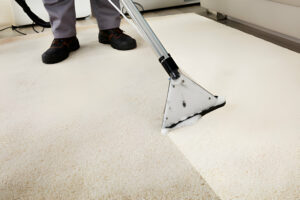
Steam cleaning for carpets is often used as a general term for hot water extraction. In most professional services, the process does not rely on steam alone. Instead, hot water mixed with cleaning solution is injected into the carpet fibres and then extracted with powerful suction. This helps loosen and remove dirt, oils, allergens, and residues from deeper within the carpet pile.
A typical professional steam cleaning process includes:
- Pre-inspection of carpet type, stains, wear patterns, and any problem areas.
- Vacuuming to remove dry soil and loose debris.
- Pre-treatment of stains and high traffic areas.
- Agitation to help break down embedded grime.
- Hot water extraction using professional equipment.
- Spot treatment if needed.
- Grooming and drying support with airflow.
The main advantage of this method is depth. Hot water extraction can flush contaminants out of the carpet rather than simply treating the surface. This is one reason many carpet manufacturers and cleaning professionals recommend it as part of long term carpet care. Guidance from the IICRC S100 standard for professional carpet cleaning reflects the importance of using appropriate restorative methods based on soil level, fibre type, and safe cleaning practices.
Steam cleaning is especially effective for:
- Deep seated dirt and grit
- Pet mess and odour treatment when paired with proper products
- Allergen reduction
- Heavily used family rooms and office walkways
- End of lease or pre inspection cleaning
- Periodic deep cleaning after long intervals between services
Because the process uses more moisture than dry cleaning, drying time is longer. Under good conditions, carpets may dry in about 4 to 8 hours, though some cases can take longer depending on humidity, airflow, carpet thickness, and the amount of soil being removed. In poorly ventilated Sydney apartments or humid coastal weather, drying may be slower unless fans and open windows are used.
How dry carpet cleaning works
Dry carpet cleaning is a broad term that can describe several low moisture methods. These may include absorbent compound cleaning, encapsulation, bonnet cleaning, or other systems that use minimal water. In many cases, a cleaning agent is applied to the carpet, worked into the fibres, and then removed by vacuuming or machine agitation. Some methods surround soil particles in a crystallising solution so they can be vacuumed away later.
The biggest appeal of dry cleaning is speed. Since very little moisture is used, carpets are often ready to walk on much sooner than with hot water extraction. This makes dry cleaning attractive for offices, hotel corridors, meeting rooms, and homes where immediate access is important.
Dry carpet cleaning is often chosen for:
- Routine maintenance between deeper cleans
- Commercial spaces that cannot afford long drying times
- Light to moderate soil levels
- Surface appearance improvement
- Situations where moisture must be limited

However, not all dry cleaning systems perform equally. Some are excellent for maintaining carpets in good condition, while others mainly improve appearance without removing deeper contaminants. If a carpet has built up oily residues, old stains, pet contamination, or packed in dirt, a low moisture process may not be enough on its own.
Another point to understand is that the term “dry” can be misleading. Most dry cleaning methods still use some moisture or chemical solution. The difference is that they use far less water than steam cleaning, not that the carpet remains completely untouched by liquid.
Steam cleaning versus dry cleaning for Sydney homes
For most homes in Sydney, steam cleaning tends to be the stronger choice when the goal is a genuinely deep clean. Carpets in family households collect far more than visible dust. They trap skin flakes, tracked in soil, pollen, crumbs, pet dander, and microscopic particles over time. If children play on the carpet or pets sleep there, deeper extraction becomes more important.
Consider a few common residential scenarios:
Homes with children
Young children spend time crawling, sitting, and playing on carpeted floors. Spills from juice, milk, snacks, and craft activities can seep into fibres. Steam cleaning is often better suited to removing residues and improving hygiene in these settings.
Homes with pets
Pet hair can be vacuumed, but odours and accidents often penetrate deeper than the surface. Dry cleaning may freshen the carpet temporarily, but steam cleaning with targeted urine treatment is usually more effective for addressing the source of the problem.
Allergy sensitive households
Carpets can hold dust mites, pollen, and other irritants. According to the EPA guide to indoor air quality, indoor pollutants can accumulate in soft furnishings and flooring, making proper cleaning part of a healthier indoor environment. Steam cleaning generally provides more thorough removal of embedded particulates than surface focused low moisture methods.
Luxury carpets and rugs
Some delicate wool carpets or specialty floor coverings may require a tailored approach. In these cases, the best method depends on manufacturer instructions, dye stability, and fibre sensitivity. Professional assessment is important because too much moisture, too much heat, or the wrong chemical balance can damage premium materials.
That said, dry cleaning still has a place in residential care. If your carpet is lightly soiled, recently deep cleaned, and you need a quick refresh before an event, a quality low moisture clean may be perfectly suitable. It can also work well in spare rooms, low traffic areas, or as part of a more frequent maintenance plan.
Steam cleaning versus dry cleaning for Sydney offices
Commercial carpet cleaning priorities are often different from residential ones. Office managers usually care about appearance, hygiene, staff comfort, and business continuity. The best method depends on the type of office, the amount of traffic, and whether cleaning can be scheduled after hours.
High traffic office areas

Reception zones, hallways, boardrooms, and open plan workspaces can accumulate compacted dirt from shoes and office chairs. Over time, this grit can wear down carpet fibres. Steam cleaning is usually better for periodic restorative cleaning because it removes embedded abrasive particles that regular vacuuming misses.
Offices needing minimal downtime
If a workplace must be operational almost immediately, dry cleaning offers a clear advantage. Staff can often return to the area sooner, reducing disruption. This is particularly useful in medical consulting rooms, co-working spaces, retail offices, and facilities with constant foot traffic.
Maintenance programs
Many commercial sites benefit from a combined strategy rather than choosing one method forever. For example, a Sydney office might use dry cleaning or encapsulation every few months to maintain appearance, then schedule steam cleaning once or twice a year for deeper restoration. This approach can extend carpet life while keeping the workplace presentable year round.
Odour, spills, and hygiene incidents
Office carpets can suffer from coffee spills, food stains, rainwater tracking, and occasional hygiene issues. When contamination goes beyond light surface soiling, steam cleaning usually provides the more complete result.
In practical terms, offices often do best with a decision based on timing. If you can clean after hours and allow proper drying overnight, steam cleaning often gives the best long term value. If same day usability is essential, dry cleaning may be the more practical option.
Drying time, mould risk, and Sydney climate considerations
One of the biggest concerns people have about steam cleaning is whether the carpet will stay wet too long. This concern is understandable, especially in humid conditions or in properties with limited airflow. Excess moisture can create problems if the cleaning is poorly performed or if the carpet backing and underlay are saturated.
Professional steam cleaning should not leave carpets soaked. Modern extraction equipment is designed to recover most of the moisture during the cleaning process. Problems are more likely when inexperienced operators over-wet the carpet, use weak extraction, or fail to account for ventilation.
In Sydney, drying conditions can vary widely:
- Coastal suburbs: Higher humidity can slow evaporation.
- Apartments: Limited airflow and closed windows can extend drying time.
- Air conditioned offices: Controlled indoor climate can help carpets dry more evenly.
- Rainy periods: Outdoor humidity may reduce drying efficiency.
To reduce drying time after steam cleaning, professionals may use air movers, open windows where practical, run fans, and adjust cleaning technique to avoid overwetting. If mould is already present due to water damage or chronic dampness, standard carpet cleaning alone may not solve the issue. In those cases, the moisture source and any underlying contamination need to be addressed separately.
Dry cleaning has an obvious edge if rapid drying is your top priority. Because it uses minimal moisture, the risk of long drying delays is much lower. This makes it appealing in buildings where ventilation is poor or where immediate use is non-negotiable.

Stain removal and odour control
Not all stains respond equally to either method. The right choice depends on what caused the stain, how old it is, and whether it has penetrated beyond the carpet fibres.
When steam cleaning is stronger
Steam cleaning is generally better for:
- Food and drink spills that have soaked in
- Pet accidents
- Muddy traffic lanes
- General dinginess caused by built up residues
- Odours linked to organic contamination
Because hot water extraction can rinse and remove contaminants, it often outperforms dry methods on deep or widespread staining. It is also more effective when pre-treatment solutions need to be flushed out after breaking down the stain.
When dry cleaning can help
Dry cleaning can be useful for:
- Light surface marks
- Interim appearance improvement
- Quick freshening before inspections or meetings
- Maintenance cleaning where staining is minor
However, odour control is where many low moisture methods reach their limit. If the source of the smell is deep in the backing or underlay, a surface level process may mask the problem rather than remove it. In pet affected homes or offices with repeated spill incidents, deeper treatment is often necessary.
Carpet longevity and manufacturer recommendations
Carpets are a significant investment in both homes and offices. Choosing the wrong cleaning method repeatedly can affect appearance, texture, and lifespan. Soil trapped in carpet acts like fine sandpaper under foot traffic, gradually wearing down fibres. For that reason, a method that removes more embedded grit can help preserve the carpet over time.
Many carpet care recommendations favour periodic hot water extraction because it removes soil from deep within the pile rather than leaving it behind. At the same time, excessive moisture, harsh chemicals, or poor technique can also damage carpet if the service is not done properly. The method matters, but the quality of execution matters just as much.
Dry cleaning can support carpet longevity when used appropriately as part of a maintenance plan. It can reduce the frequency of restorative cleans and keep carpets looking presentable between deeper services. But if dry cleaning is used exclusively on heavily soiled carpets, accumulated residues and grit may continue to degrade the fibres.
The best long term strategy is often balanced rather than extreme. Regular vacuuming, prompt stain treatment, periodic low moisture maintenance if needed, and scheduled steam cleaning for deep restoration can work together to protect carpet condition.
Cost considerations and value over time
Price often influences the decision, but the cheapest quote is not always the best value. Dry cleaning may sometimes cost less or appear more convenient because the process is faster. Steam cleaning may cost more in some cases because it involves deeper treatment, more setup, and longer drying management.

When comparing value, ask what is included:
- Pre-vacuuming
- Spot treatment
- Deodorising
- Stain removal attempts
- Furniture moving
- Drying assistance
- Traffic lane treatment
A low price for dry cleaning may not be a bargain if the carpet still feels grimy or stains reappear quickly. Likewise, a steam cleaning service is not automatically better if the operator leaves the carpet too wet or does not treat stains properly. Value comes from choosing the right method for the carpet’s condition and having it done well.
For offices, the cost of downtime should also be considered. If a carpet can be dry cleaned and used almost immediately, that convenience may justify the method for routine maintenance. For homes, the deeper result of steam cleaning may offer better value if it delays replacement and improves hygiene.
Which option is best for allergy concerns and indoor health
If health is a major priority, steam cleaning usually has the advantage. Carpets can trap allergens, dust, and residues that affect indoor comfort. While no cleaning method can make a home medically sterile, hot water extraction is generally more effective at removing material from within the carpet rather than simply improving the surface appearance.
This can matter in Sydney homes during pollen season or in offices where air conditioning circulates indoor particles. People with asthma, allergies, or sensitivity to dust often prefer a method that extracts contaminants more completely. Dry cleaning can still play a role in maintenance, but it is usually not the first choice when the main objective is deeper allergen removal.
It is also important to use appropriate products and ensure adequate drying. A well performed steam clean with proper extraction and ventilation is usually a better health focused option than a quick surface treatment that leaves residues behind.
How to decide based on your specific situation
If you are still unsure, the simplest way to decide is to match the method to the real condition of your carpet and the practical needs of your property.
Choose steam cleaning if:
- Your carpet is heavily soiled
- You have pets, children, or allergy concerns
- There are odours or deep stains
- You want a restorative clean rather than a cosmetic refresh
- You can allow time for drying
- The carpet has not been professionally cleaned in a long time
Choose dry cleaning if:
- Your carpet is only lightly to moderately soiled
- You need very fast drying and immediate access
- You want interim maintenance between deep cleans
- The area is commercial and downtime must be minimal
- Moisture exposure needs to be kept low
Choose a combined approach if:
- You manage an office with year round traffic
- You want appearance maintenance plus periodic deep restoration
- Your home carpets need regular upkeep but also occasional intensive cleaning
For many Sydney
Need help with Steam Cleaning vs Dry Cleaning for Carpets in Sydney Which Option Is Best for Your Home or Office?
Get A Free Quote Today
Need help with Steam Cleaning vs Dry Cleaning for Carpets in Sydney Which Option Is Best for Your Home or Office? Get A Free Quote Today